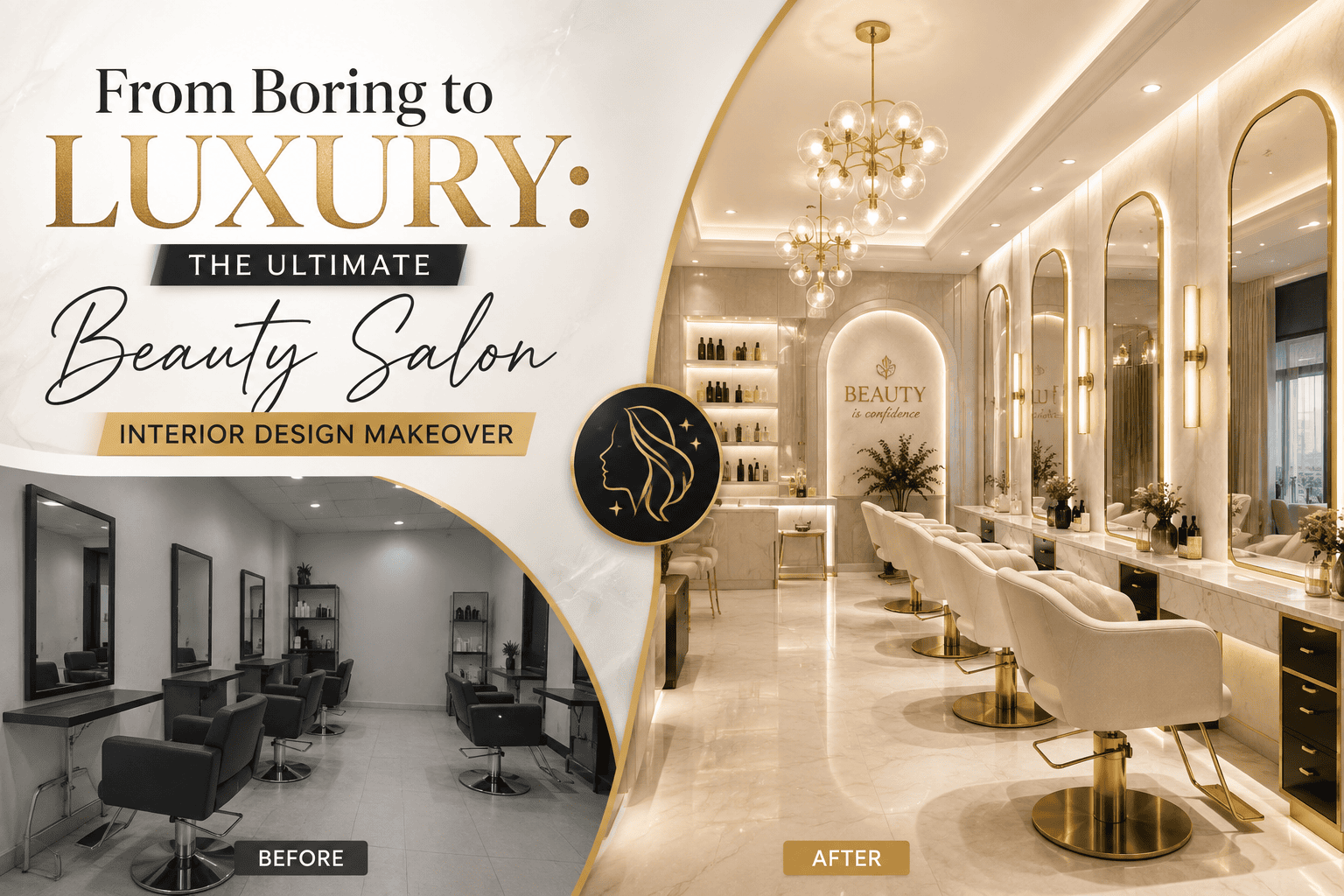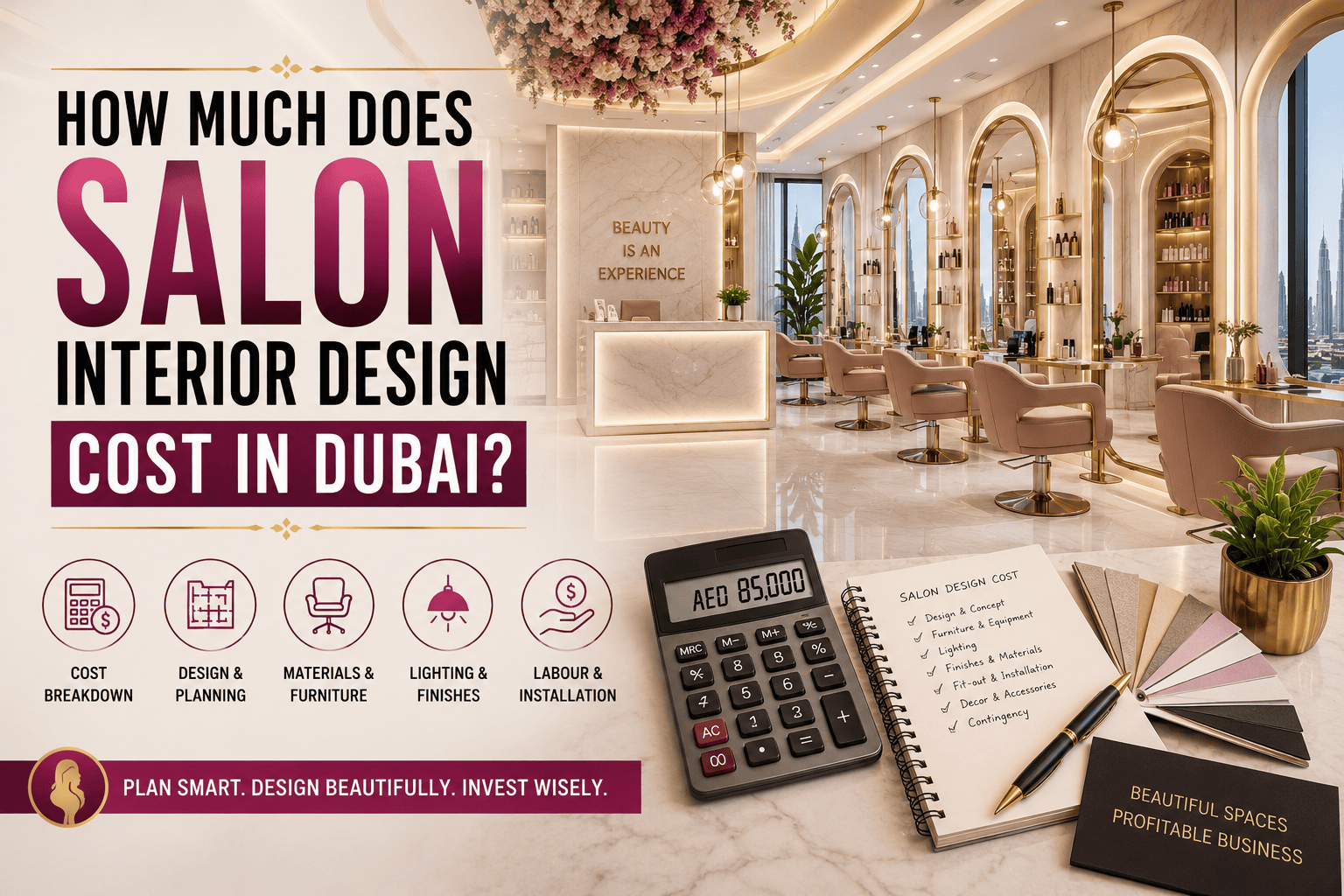
Salon interior design in Dubai typically costs between AED 120 and AED 400 per square foot, depending on finish level, plumbing needs, and equipment integration. Hiring one of the best salon interior designers in Dubai means budgeting for both aesthetics and technical requirements like ventilation, drainage, and station wiring — not just decor. Why Salon Design Costs Are Hard to Predict Ask five salon owners in Dubai what their fit-out cost, and you’ll likely get five very different answers. That’s because salons aren’t simple decorative spaces — they’re technical environments with plumbing, ventilation, and electrical demands that most other retail interiors don’t have. A nail bar has different needs than a hair salon. A hair salon has different needs than a full-service spa with treatment rooms. Each adds its own layer of cost, from water lines for washing stations to specialized lighting for color work. This guide breaks down realistic cost ranges for salon interior design in Dubai, what drives the price up or down, and what to look for when choosing a designer who understands both the beauty industry and Dubai’s building requirements. What Makes Salon Design Different From Other Retail Interiors? Salons combine retail-style branding with technical, almost clinical-level infrastructure. A qualified designer needs to plan for: Plumbing for wash basins, shampoo stations, and treatment rooms Ventilation to manage chemical fumes from color and treatment products Electrical load for hairdryers, styling tools, and equipment running simultaneously Hygiene-compliant surfaces that are easy to clean and disinfect Station spacing that meets both comfort standards and local health regulations Get any of these wrong, and you’re looking at costly rework after the salon is already operating. Average Salon Interior Design Costs in Dubai Costs are usually quoted per square foot and depend heavily on the salon category: Fit-Out Level Cost per Sq Ft (AED) Typical For Basic fit-out 120–200 Small nail bars, barbershops Standard fit-out 200–300 Mid-size hair and beauty salons Premium fit-out 300–400+ Branded salon chains, client-facing flagship stores Luxury spa-salon 400–600+ Full-service spas with treatment rooms These figures typically include partitions, flooring, plumbing rough-in, lighting, and basic furniture. Specialized salon equipment (styling chairs, wash units, treatment beds) is often quoted separately. What Drives the Difference Between Basic and Premium? Basic: Standard flooring, simple partitions, off-the-shelf styling chairs Standard: Branded reception, mid-range wash units, layered lighting Premium: Custom joinery, designer fixtures, statement lighting, high-end finishes Luxury: Bespoke design throughout, imported materials, private treatment suites, smart climate control Key Cost Factors for Salon Interior Design in Dubai 1. Plumbing and Drainage Requirements Wash stations and treatment rooms need proper water supply and drainage, which is one of the biggest cost differences between a salon fit-out and a standard retail fit-out. The more wash stations you have, the more plumbing work is needed. 2. Ventilation and Air Quality Chemical treatments — coloring, keratin, nail products — release fumes that need proper extraction. Good ventilation design isn’t optional; it directly affects staff health and client comfort, and may be required for licensing approval. 3. Equipment and Furniture Quality Styling chairs, wash units, and treatment beds vary enormously in price. Imported, ergonomic equipment costs significantly more than standard commercial-grade options but often lasts longer and feels more premium to clients. 4. Number of Service Zones A salon offering hair, nails, facials, and treatment rooms needs more zoning, plumbing, and electrical planning than a single-service salon, which increases both design complexity and cost. 5. Branding and Client Experience Design Reception areas, waiting lounges, and retail display walls for product sales all add to the design scope. These areas matter commercially — they’re often where clients form their first impression and make secondary purchases. 6. Licensing and Approvals Salons in Dubai need approval from the Dubai Department of Economy and Tourism (or relevant free zone authority) and Dubai Civil Defence for fire and safety compliance. Some treatments may require additional health authority approval, which can affect layout requirements. How to Choose the Best Salon Interior Designers in Dubai 1. Look for Salon-Specific Experience Ask to see completed salons, not just general retail or residential projects. A portfolio with real plumbing layouts, station spacing, and lighting plans tells you far more than concept renders alone. 2. Confirm They Understand Technical Requirements The best salon designers coordinate closely with MEP (mechanical, electrical, plumbing) engineers to make sure wash stations, ventilation, and electrical loads are planned correctly from day one — not fixed after the fact. 3. Ask About Material Durability Salons see heavy daily use — chemical spills, water exposure, and constant foot traffic. Designers should recommend flooring and surfaces built for this kind of wear, not just visually appealing finishes. 4. Check Their Approach to Space Planning Good space planning balances station efficiency (how many clients can be served comfortably) with a relaxed, welcoming atmosphere. A designer should be able to explain their layout logic, not just show a pretty floor plan. 5. Discuss Branding Integration Your salon’s interior should reflect your brand — from color palette to signage to the overall client journey. The best designers treat branding as part of the design process, not an afterthought added at the end. Current Trends in Salon Interior Design in Dubai Warm, spa-like atmospheres — softer lighting and natural materials replacing sterile, all-white salon looks Private treatment pods — semi-enclosed spaces for services like facials or color consultations, offering more privacy Sustainable materials — low-VOC paints and eco-friendly finishes, especially in ventilation-sensitive areas Statement reception and retail walls — designed to showcase products and create a strong first impression Biophilic touches — greenery and natural textures to soften the technical, equipment-heavy nature of salon spaces A Note for Homeowners While full salon-style plumbing isn’t practical at home, many homeowners borrow salon design ideas — like layered lighting, large mirrors, and dedicated vanity zones — for home decor ideas in bathrooms and dressing areas, blending modern home design with a touch of luxury interiors. Conclusion Salon interior design cost in Dubai depends heavily on plumbing needs, ventilation requirements,… Continue reading How Much Does Salon Interior Design Cost in Dubai?

Hidden Container for Elementor Template
Add custom CSS for hiding and showing the mega menu on hover