
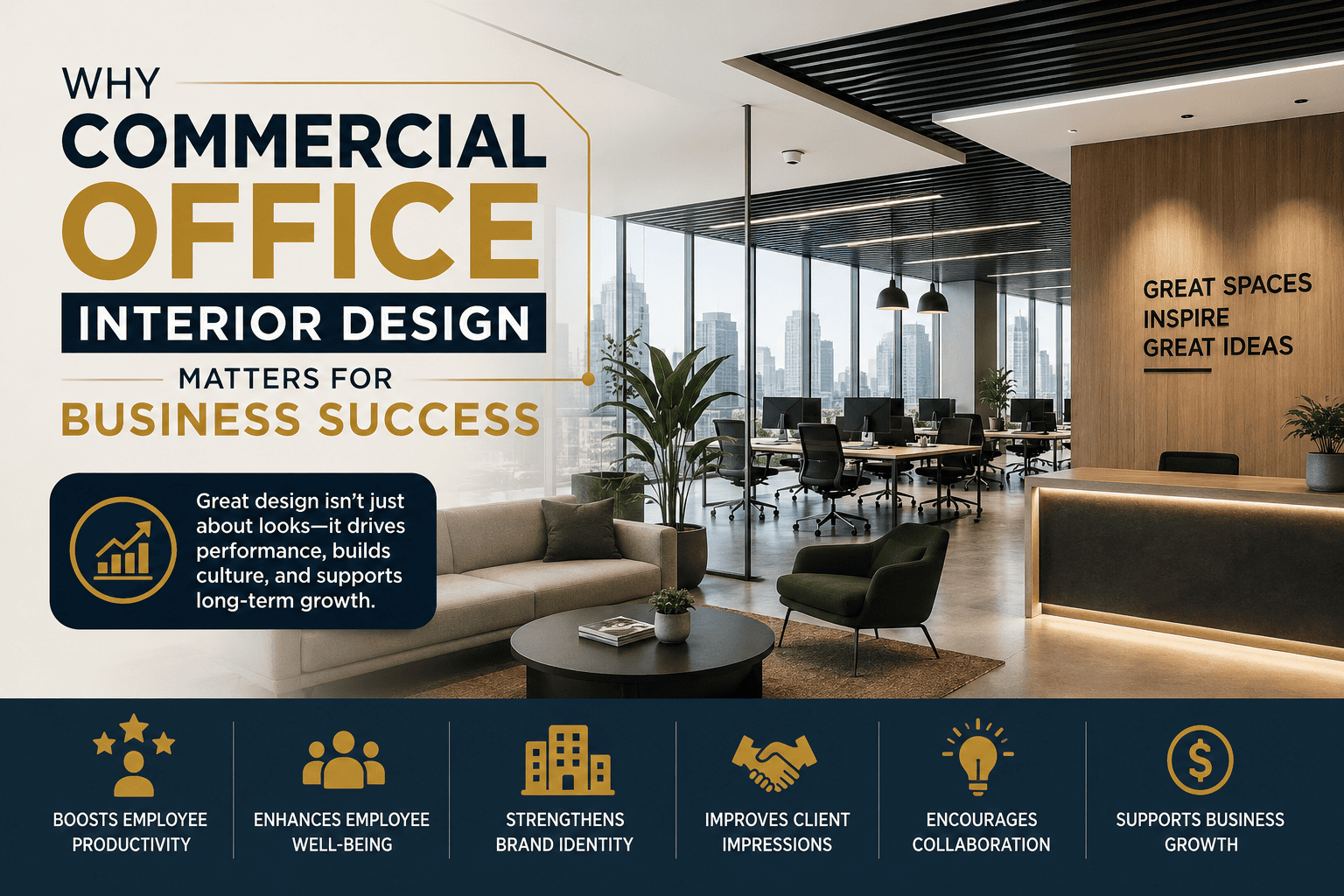
Commercial office interior design shapes how employees work, how clients perceive your brand, and how efficiently your business runs. In Dubai’s competitive market, a well-planned office boosts productivity, supports talent retention, and reflects company values through smart space planning, functional layouts, and modern design choices that align with business goals.
Introduction
Walk into any successful company’s office in Dubai, and you’ll notice something right away. The space feels intentional. Every desk, meeting room, and break area seems to have a purpose. That’s not an accident—it’s the result of thoughtful commercial office interior design.
Many business owners still think of office design as decoration. Paint a wall, add some plants, buy nice chairs. But real office design goes much deeper. It affects how your team communicates, how long employees stay motivated, and how clients judge your business within the first thirty seconds of walking through your door.
Dubai’s business landscape moves fast. Companies compete not just for customers but for skilled employees too. An outdated, cramped, or poorly organized office can quietly work against you, even if your product or service is excellent. This article breaks down why office interior design matters, what trends are shaping Dubai workspaces in 2026, and how to make smart decisions whether you’re designing a startup office or a corporate headquarters.
What Is Commercial Office Interior Design?
Commercial office interior design is the process of planning and designing workspaces to be functional, safe, and visually aligned with a company’s brand and goals. It combines architecture, space planning, furniture selection, lighting, and materials to create environments that support how people actually work.
Unlike residential design, commercial design must balance aesthetics with practical business needs like foot traffic, compliance codes, technology infrastructure, and employee efficiency.
Why Does Office Design Directly Impact Business Performance?
It Shapes Employee Productivity
Poorly designed offices create friction. Bad lighting causes eye strain. Noisy open floors interrupt focus. Awkward layouts waste time as employees walk further than needed to collaborate.
Research from workplace design studies consistently links natural light, ergonomic furniture, and acoustic control to measurable gains in focus and output. When a space supports how people naturally work, they simply get more done with less fatigue.
It Influences Client and Investor Perception
In Dubai, where business relationships often begin with an in-person meeting, your office is a silent salesperson. A clean, modern reception area signals stability. A cluttered, mismatched space raises doubts before anyone speaks a word.
Clients and investors form impressions quickly. A well-designed office says: this company is organized, professional, and here to stay.
It Supports Talent Attraction and Retention
Top employees have options, especially in Dubai’s competitive job market. Comfortable, well-planned workspaces with good lighting, quiet zones, and collaborative areas help companies stand out to job seekers.
Employees also stay longer at companies where the physical environment feels considerate of their wellbeing, not just their output.
Key Elements of Effective Office Interior Design
Space Planning
Space planning is the foundation of every good office design. It determines how much room each department needs, where meeting rooms go, and how people move through the space without bottlenecks.
Good space planning considers:
- Employee headcount and future growth
- Department adjacency (which teams need to sit near each other)
- Circulation paths and emergency exits
- Balance between private offices and open areas
Lighting Design
Lighting affects mood, energy, and even health. Offices that rely too heavily on harsh fluorescent lighting often see higher fatigue levels among staff.
Modern office design in Dubai increasingly uses layered lighting: natural daylight where possible, combined with adjustable ambient and task lighting.
Furniture and Ergonomics
Ergonomic furniture isn’t a luxury add-on anymore—it’s a baseline expectation. Adjustable chairs, sit-stand desks, and properly sized workstations reduce physical strain and support longer, healthier workdays.
Acoustics and Privacy
Open-plan offices are popular, but without acoustic planning, they become noisy and distracting. Smart design uses sound-absorbing materials, partitions, and designated quiet zones to balance collaboration with focus.
Brand Identity Through Design
Interior styling should reflect a company’s brand personality. Color palettes, materials, and layout choices can communicate whether a business is traditional and trustworthy or innovative and bold.
Trends Shaping Commercial Interiors in Dubai
Dubai’s office design scene evolves quickly, influenced by global workplace shifts and local business culture.
Biophilic design — Bringing nature indoors through greenery, natural materials, and daylight is one of the strongest trends in modern home and office design. It’s linked to lower stress and better air quality perception.
Flexible, hybrid-ready layouts — With hybrid work now common, offices are designing multi-purpose zones that adapt between focused work, team meetings, and casual collaboration.
Sustainable materials — Businesses increasingly choose eco-conscious materials and energy-efficient systems, both for cost savings and to meet growing sustainability expectations.
Tech-integrated workspaces — Smart lighting, video conferencing rooms, and wireless charging stations are becoming standard in Dubai’s newer commercial fit-outs.
Luxury minimalism — Many Dubai businesses favor clean lines, high-quality materials, and understated luxury interiors over heavy ornamentation, projecting confidence without excess.
Office Design for Different Business Types
Startups and Small Businesses
Startups usually need flexible, cost-efficient layouts that can scale. Open floor plans with modular furniture allow the space to grow with the team without major renovations.
Corporate Headquarters
Larger corporations often invest in statement reception areas, structured department zones, and dedicated meeting facilities that reflect long-term brand authority.
Retail-Adjacent and Client-Facing Offices
Businesses that host frequent client visits, like consultancies or real estate firms, benefit from designing a strong first impression zone near the entrance, separate from internal working areas.
How to Plan a Commercial Office Interior Design Project
- Define your goals. Are you prioritizing collaboration, brand image, cost efficiency, or employee wellbeing? Your goals shape every design decision.
- Assess your current space and needs. Consider headcount, department structure, and growth plans over the next three to five years.
- Set a realistic budget. Include furniture, lighting, technology, and contingency costs.
- Work with experienced designers. A qualified interior design team understands local building codes, material sourcing, and Dubai’s commercial fit-out regulations.
- Plan for flexibility. Choose layouts and furniture systems that can adapt as your business changes.
Conclusion
Commercial office interior design isn’t just about how a workspace looks. It directly affects productivity, brand perception, employee satisfaction, and long-term business growth. In a market as competitive as Dubai, investing in smart space planning, quality materials, and thoughtful design isn’t optional anymore—it’s a business decision with measurable returns.
If your office no longer supports how your team works or how your brand wants to be seen, it may be time for a change. A professional interior design partner can help you turn your workspace into an asset that works as hard as your team does.
Frequently Asked Questions
1. What is the difference between commercial and residential interior design?
Commercial interior design focuses on functional, brand-aligned spaces for businesses, following commercial building codes and workflow needs. Residential design centers on personal comfort and lifestyle within private homes.
2. How much does office interior design cost in Dubai?
Costs vary widely based on office size, materials, and scope of work, ranging from basic fit-outs to premium luxury interiors. Getting a detailed quote from a local design firm gives the most accurate estimate for your specific project.
3. How long does an office fit-out project usually take?
Small office fit-outs can take a few weeks, while larger corporate projects may take two to four months, depending on design complexity, approvals, and construction requirements.
4. Does office design really affect employee productivity?
Yes. Factors like lighting, noise control, ergonomic furniture, and layout directly influence focus, comfort, and energy levels, which in turn affect daily output and job satisfaction.
5. What is biophilic design and why is it popular in offices?
Biophilic design incorporates natural elements like plants, natural light, and organic materials into interiors. It’s popular because it’s linked to reduced stress and improved wellbeing among employees.
6. Should small businesses invest in professional office design?
Yes. Even small businesses benefit from smart space planning and basic design principles, which can improve efficiency and create a stronger first impression for clients, often without requiring a large budget.
7. What permits are needed for office interior fit-outs in Dubai?
Most commercial fit-outs in Dubai require approval from the relevant free zone authority or Dubai Municipality, depending on location. An experienced local design firm typically manages this approval process for clients.
8. How often should a business update its office interior design?
Many businesses refresh their office design every five to seven years, or sooner if there are major changes in team size, work style, or brand direction.
Creative Shelf LLC: Redefining Interior Design Excellence in Dubai
Since its inception in 2007, Creative Shelf LLC, co-founded by Mr. Huzefa Altaf, has been a cornerstone of Dubai’s interior design and fit-out industry. Renowned for crafting smart, functional, and visually stunning spaces, Creative Shelf delivers bespoke solutions for residential, commercial, retail, hospitality, exhibition, and industrial projects. Under Mr. Huzefa Altaf’s visionary leadership, the company—part of the Creative Group of Companies, including Creative Furniture and Creative Interior Company—leverages an in-house execution model to ensure seamless project delivery, from innovative design to precision fit-out.
With nearly two decades of expertise, Creative Shelf transforms spaces, focusing on sustainability, user-centric design, and measurable ROI through strategic brand integration. Their diverse portfolio, from luxurious villas to dynamic office spaces, showcases their mastery in blending aesthetics with functionality, earning them a reputation as a trusted authority in the UAE.
Creative Shelf’s thought leadership is evident in their blog, which offers expert insights on design trends and practical solutions, empowering clients and enthusiasts alike. Committed to excellence, innovation, and quality, Creative Shelf LLC continues to set the standard for interior design and fit-out services in Dubai, creating spaces that inspire and endure.