
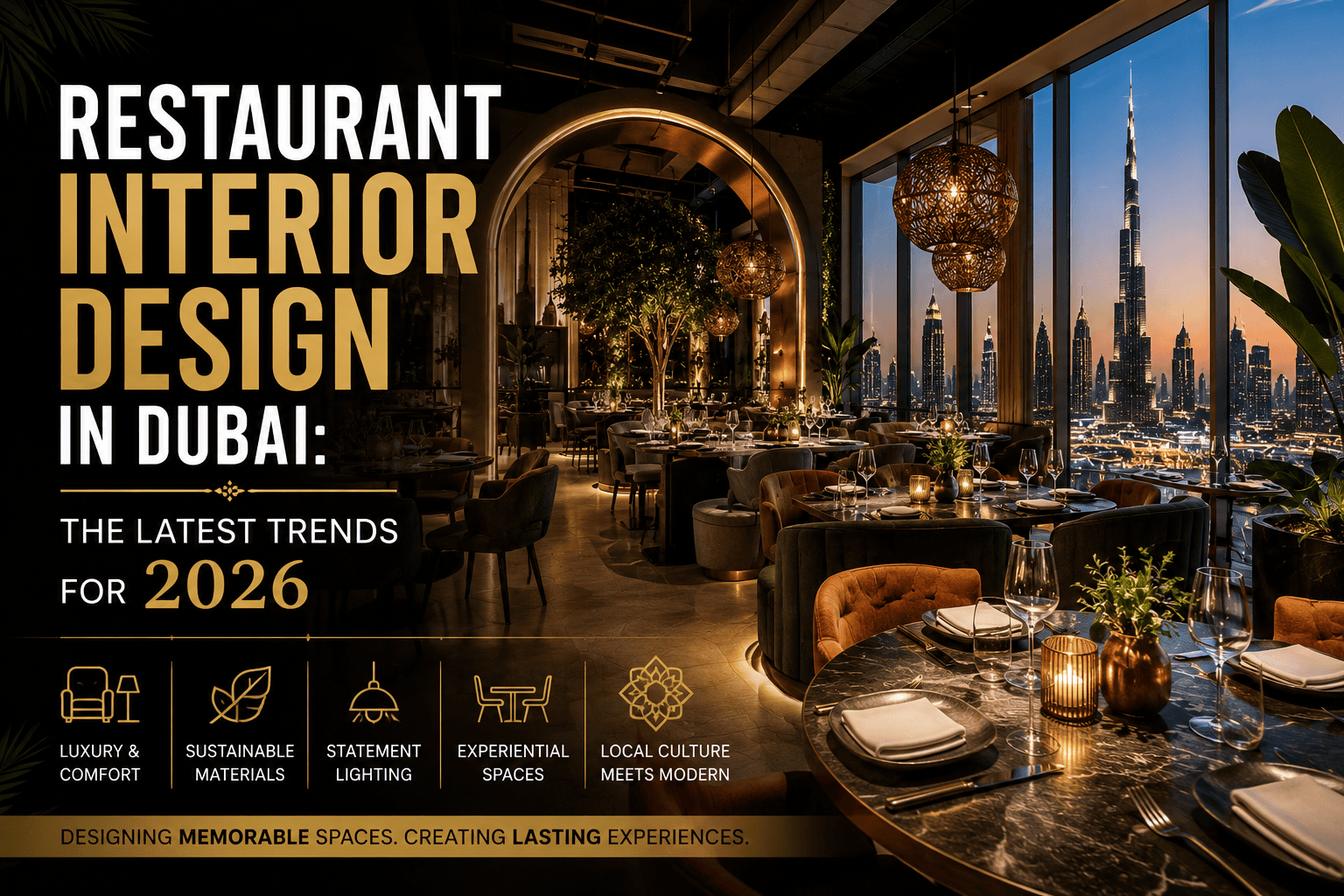
Restaurant interior design in Dubai is trending toward biophilic elements, warm minimalist palettes, open kitchens, and Instagram-worthy statement features like textured walls and sculptural lighting. Restaurants are also investing in flexible seating, acoustic comfort, and sustainable materials to balance atmosphere with everyday practicality.
Why Restaurant Design Trends Matter in Dubai
Dubai’s dining scene moves fast. New concepts open almost weekly, and diners here have high expectations — not just for the food, but for the experience around it. A restaurant’s interior often decides whether someone books a table or scrolls past.
Design isn’t just about looking good in photos anymore. It shapes how long people stay, how much they spend, and whether they come back. A well-designed restaurant supports the concept, the menu, and the flow of service — all at once.
This article breaks down the interior design trends currently shaping restaurants across Dubai, from casual cafés to fine dining spaces, so you know what to consider whether you’re opening a new venue or refreshing an existing one.
What Makes Restaurant Interior Design Different From Other Commercial Spaces?
Restaurant design has to solve problems most commercial interiors don’t. It needs to:
- Support fast, efficient kitchen-to-table service flow
- Handle heavy daily wear on floors, seating, and surfaces
- Balance acoustics so the space feels lively, not deafening
- Create distinct zones for dining, bar, waiting, and sometimes outdoor seating
- Reflect the brand and cuisine through interior styling, not just decoration
A designer without hospitality experience may create a beautiful space that becomes a nightmare to run once it’s full of guests and staff.
Top Restaurant Interior Design Trends in Dubai Right Now
1. Biophilic and Nature-Inspired Design
Greenery walls, natural wood, stone textures, and abundant daylight continue to dominate Dubai’s restaurant scene. Biophilic design brings the outdoors in — a welcome contrast to the city’s desert climate and helps spaces feel calmer and more inviting.
Common applications include:
- Living green walls near entrances or dining zones
- Natural rattan and wood furniture
- Large windows or skylights where the building allows
2. Warm Minimalism Over Maximalist Glam
Dubai restaurants have shifted away from heavy gold-and-marble opulence toward warm minimalism — clean lines, earthy tones, and fewer but more intentional design statements. Think terracotta, sand, and olive palettes paired with soft lighting rather than dramatic chandeliers everywhere.
This trend keeps spaces feeling premium without overwhelming the senses — a shift many designers link to changing guest preferences toward comfort over spectacle.
3. Open and Semi-Open Kitchens
Diners increasingly want to see their food being prepared. Open or semi-open kitchen concepts add energy to a restaurant and build trust in freshness and hygiene. They also double as a design feature — chefs at work become part of the visual experience.
This trend works well for casual and mid-range concepts but requires careful space planning to manage heat, noise, and ventilation near dining areas.
4. Statement Lighting as a Design Anchor
Lighting has become one of the biggest investment areas in restaurant design. Sculptural pendant lights, layered lighting zones, and warm color temperatures are used to define different areas of a single space — bar, main dining, and private booths — without needing walls.
5. Textured and Tactile Materials
Flat, glossy surfaces are giving way to texture: fluted wood panels, raw plaster walls, woven textiles, and hand-finished tiles. These details add depth and a sense of craftsmanship, which photographs well and feels more premium in person.
6. Flexible, Multi-Use Seating Layouts
With Dubai’s mix of solo diners, families, and large group bookings, flexible seating has become essential. Movable furniture, banquette seating that can be reconfigured, and modular booths let restaurants adapt the same floor plan to different group sizes throughout the day.
7. Sustainable and Locally Sourced Materials
More restaurant owners are asking for sustainable materials — reclaimed wood, recycled tiles, and locally sourced finishes — both for environmental reasons and because it supports a more authentic, grounded design story.
8. Instagram-Ready Focal Points
A single striking feature — a neon sign, a floral archway, a bold mural, or a dramatic bar backdrop — is often designed specifically to be photographed and shared. This isn’t vanity; it’s a genuine driver of organic marketing in a city where social media heavily influences dining choices.
How Restaurant Design Differs for Different Concepts
Fine Dining
Fine dining spaces in Dubai lean into luxury interiors — rich materials, low lighting, and generous spacing between tables for privacy and a sense of occasion.
Casual and Café Concepts
Casual spaces favor bright, flexible layouts, durable furniture, and a relaxed atmosphere that encourages longer stays — ideal for co-working diners and social meetups.
Cloud Kitchens and Hybrid Spaces
Even delivery-focused kitchens are investing in modern home design-inspired staff areas and small front-of-house pickup zones, reflecting rising brand consciousness even in behind-the-scenes formats.
Practical Tips for Restaurant Owners Planning a Redesign
- Start with your concept, not the trend list. Trends should support your brand story, not replace it.
- Prioritize acoustics early. Hard surfaces look great but can make a full restaurant unbearably loud without acoustic treatment.
- Plan kitchen-to-table flow before finalizing seating layout. Service efficiency affects both guest experience and staff turnover.
- Choose durable materials for high-traffic zones. Entrances, bar areas, and server paths need finishes that hold up daily.
- Work with designers experienced in commercial interiors, not just residential or retail, since hospitality spaces have unique operational demands.
A Note for Homeowners: Bringing Restaurant Design Home
Many of these same principles — warm minimalism, textured materials, layered lighting, and biophilic touches — are increasingly popular in home dining spaces too. Homeowners looking for fresh home decor ideas often borrow directly from restaurant design when planning open-concept kitchens or entertaining areas.
Conclusion
Restaurant interior design in Dubai is moving toward warmer, more natural, and more experience-driven spaces — without losing sight of the practical demands of running a busy dining venue. From biophilic touches to flexible seating and statement lighting, the best-designed restaurants balance atmosphere with everyday function.
If you’re planning a new restaurant concept or refreshing an existing space in Dubai, working with a design team experienced in hospitality interiors can help you turn these trends into a space that works as well as it looks. Get in touch with a specialized interior design company to discuss your concept and next steps.
Frequently Asked Questions
1. What is the most popular restaurant design style in Dubai right now? Warm minimalism — clean lines, earthy tones, and natural materials — is currently one of the most popular styles, replacing heavier, more ornate looks in many new restaurant openings.
2. How much does restaurant interior design cost in Dubai? Costs vary by size, concept, and finish level, generally ranging from moderate budgets for casual cafés to significantly higher investments for fine dining spaces with custom joinery and premium materials. A detailed quote depends on your specific floor plan and finishes.
3. Why is biophilic design popular in Dubai restaurants? Biophilic design brings natural elements like greenery, wood, and daylight into interiors, creating a calming contrast to Dubai’s desert climate and helping spaces feel fresher and more inviting to guests.
4. Do open kitchens work for all restaurant concepts? Open kitchens suit casual and mid-range concepts well but require careful planning for heat, noise, and ventilation, so they’re not always ideal for intimate fine dining spaces.
5. How important is lighting in restaurant design? Lighting is one of the most important design elements, as it defines mood, separates zones without walls, and directly affects how long guests stay and how photos of the space look on social media.
6. Can restaurant design trends be applied to home dining spaces? Yes. Many homeowners borrow restaurant design elements — like layered lighting, natural textures, and warm minimalism — to refresh kitchens, dining rooms, or entertaining spaces at home.
7. What should I prioritize first when redesigning a restaurant? Start with your concept and service flow before choosing finishes. Getting kitchen-to-table flow and seating layout right prevents costly changes after construction begins.
8. Are sustainable materials common in Dubai restaurant design? Yes, sustainable and locally sourced materials are increasingly requested, both for environmental reasons and because they add an authentic, grounded feel to a restaurant’s overall design story.

Creative Shelf LLC: Redefining Interior Design Excellence in Dubai
Since its inception in 2007, Creative Shelf LLC, co-founded by Mr. Huzefa Altaf, has been a cornerstone of Dubai’s interior design and fit-out industry. Renowned for crafting smart, functional, and visually stunning spaces, Creative Shelf delivers bespoke solutions for residential, commercial, retail, hospitality, exhibition, and industrial projects. Under Mr. Huzefa Altaf’s visionary leadership, the company—part of the Creative Group of Companies, including Creative Furniture and Creative Interior Company—leverages an in-house execution model to ensure seamless project delivery, from innovative design to precision fit-out.
With nearly two decades of expertise, Creative Shelf transforms spaces, focusing on sustainability, user-centric design, and measurable ROI through strategic brand integration. Their diverse portfolio, from luxurious villas to dynamic office spaces, showcases their mastery in blending aesthetics with functionality, earning them a reputation as a trusted authority in the UAE.
Creative Shelf’s thought leadership is evident in their blog, which offers expert insights on design trends and practical solutions, empowering clients and enthusiasts alike. Committed to excellence, innovation, and quality, Creative Shelf LLC continues to set the standard for interior design and fit-out services in Dubai, creating spaces that inspire and endure.