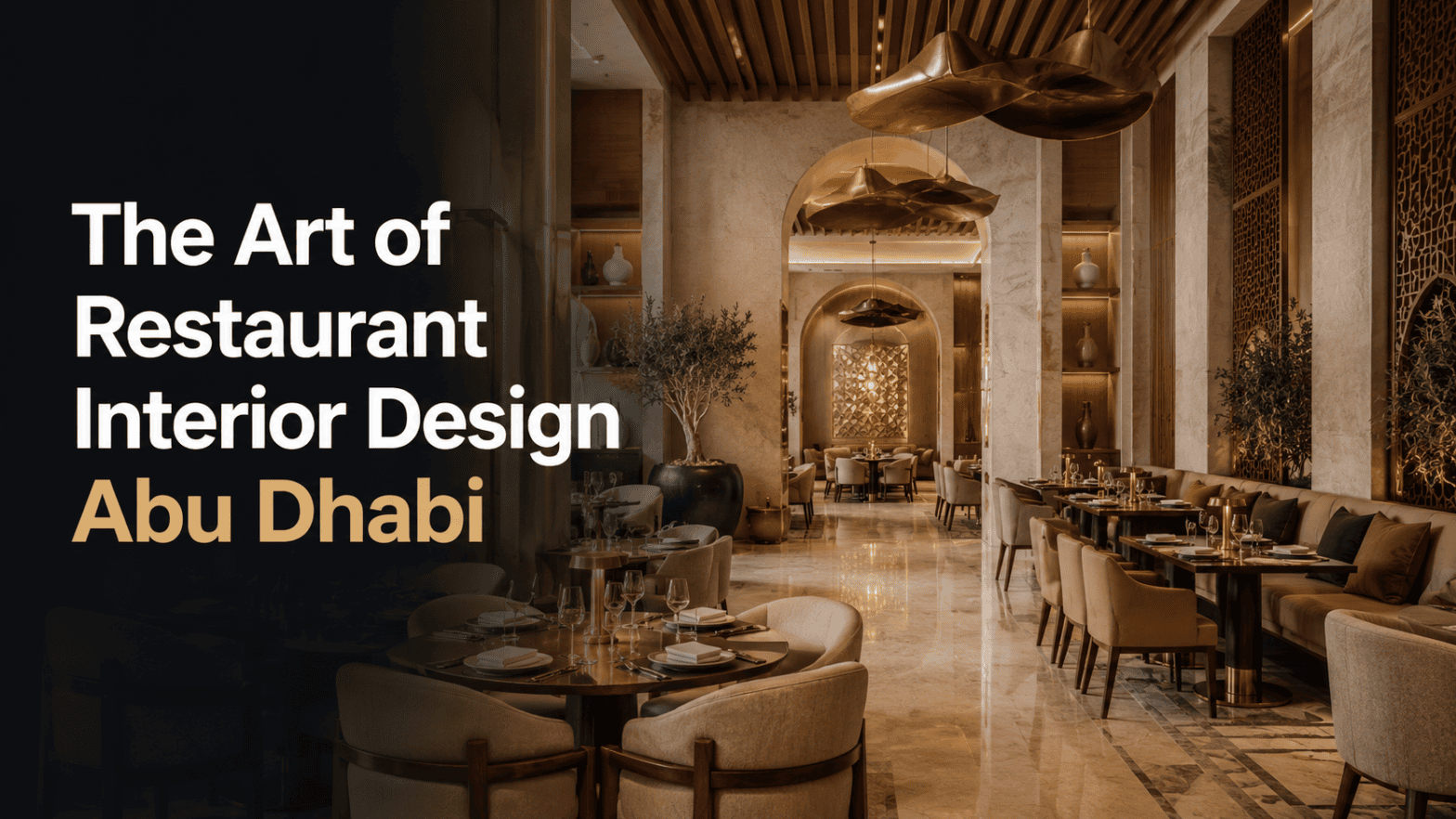
Restaurant interior design in Abu Dhabi focuses on blending luxury aesthetics with cultural heritage and functional flow. Successful projects prioritize high-end materials, acoustic comfort, and immersive lighting to create memorable dining environments. By integrating local architectural elements with modern spatial planning, designers help businesses increase guest retention and maximize operational efficiency in a competitive market. The culinary landscape in the UAE is nothing short of legendary. From the bustling streets of Dubai to the refined, sophisticated corners of the capital, the demand for exceptional dining experiences has never been higher. When we talk about restaurant interior design in Abu Dhabi, we aren’t just discussing furniture or color palettes; we are talking about the architecture of emotion. A restaurant is a stage, and the interior design is the set that tells your brand’s story before the first dish even arrives at the table. In a city where luxury and innovation go hand-in-hand, restaurant owners face the unique challenge of balancing aesthetic appeal with strict operational requirements. Whether you are launching a fine-dining establishment on Saadiyat Island or a chic, casual eatery in the city center, your space must be designed to handle high traffic while maintaining an atmosphere of exclusivity. This guide explores the core principles of creating world-class restaurant interiors that resonate with the discerning Abu Dhabi and Dubai clientele, ensuring your venue stands out in a crowded, high-stakes market. Why Interior Design is Your Most Important Marketing Tool Many restaurateurs make the mistake of viewing design as a secondary expense, something to be addressed after the menu is finalized. However, in the modern hospitality sector, your interior is your most powerful marketing asset. It is the first thing guests see on social media, and it is the environment that dictates how much time—and money—they spend in your establishment. Effective design serves as a silent salesman. It guides guests through the space, highlights your key selling points, and reinforces your brand identity. In the UAE, where guests value high-end finishes and unique “Instagrammable” moments, a well-planned interior is essential for organic growth and repeat business. Brand Identity: Your physical space should mirror the philosophy behind your food. Guest Comfort: Ergonomic seating and proper flow prevent bottlenecks and keep customers relaxed. Social Media Reach: Strategic focal points encourage guests to share their experience online. Operational Efficiency: A layout optimized for service reduces wait times and improves staff productivity. Integrating Local Culture with Modern Luxury Abu Dhabi has a distinct architectural identity that marries traditional Arabic elements with ultra-modern luxury. Incorporating these nuances into your restaurant design can make your venue feel grounded and authentic rather than like a generic international chain. This is the hallmark of high-end commercial interiors in the UAE. Designers often utilize geometric mashrabiya patterns, warm metallic accents, and natural stone textures to create a sense of place. The key is to avoid clichés. Instead of overwhelming the space with traditional motifs, use them as subtle accents in lighting fixtures, partition screens, or feature walls. This creates an atmosphere that feels sophisticated, timeless, and respectful of the local culture. Material Palette: Use high-quality marble, brushed brass, and rich woods to convey luxury. Lighting Design: Incorporate warm, layered lighting that mimics the soft glow of sunset. Spatial Geometry: Use arches and flowing lines to create a sense of architectural continuity. Artistic Integration: Commission local artists to create murals or installations that tell a story. The Science of Spatial Planning and Flow No matter how beautiful a restaurant looks, it will fail if the floor plan is dysfunctional. In the bustling restaurant scenes of Abu Dhabi and Dubai, space is a premium asset. You need to maximize the number of covers while ensuring that guests never feel cramped or rushed by the movement of waitstaff. Professional space planning involves analyzing the “back-of-house” to “front-of-house” relationship. Your servers should be able to move from the kitchen to the dining area without crossing paths with guests entering the restroom or the main foyer. This invisible efficiency is what separates a professional design from a DIY project. Zoning: Create different “vibes” within a single space, such as a lounge area, a formal dining section, and a bar. Traffic Patterns: Map out the most efficient routes for staff to minimize collision risks. Acoustic Management: Use sound-absorbing materials like upholstered panels or heavy curtains to keep noise levels manageable. Privacy Buffers: Utilize decorative screens to provide intimacy for tables near high-traffic areas. Lighting: The Secret Ingredient to Atmosphere Lighting is perhaps the most critical element in restaurant interior design. In Abu Dhabi, where the sunlight is intense during the day, your lighting design needs to be highly adaptable. You need a system that can transition seamlessly from bright, airy lunch settings to moody, intimate dinner environments. Layered lighting is the professional standard. You should have a combination of ambient light (general illumination), task light (for reading menus and service), and accent light (to highlight artwork, plants, or architectural features). Never rely on a single source of overhead lighting, as this creates harsh shadows and an unappealing clinical feel. Dimmable Systems: Always install smart, dimmable lighting zones that can be adjusted throughout the day. Color Temperature: Stick to warm color temperatures (2700K–3000K) to make food look more appetizing. Focal Points: Use spotlights to draw attention to signature dishes or a central bar feature. Decorative Fixtures: Choose statement pendant lights that serve as art pieces in their own right. Sustainability and Biophilic Design Trends The global trend toward sustainable design has made a significant impact on the restaurant industry in the Middle East. Biophilic design—the practice of incorporating natural elements into the built environment—is particularly effective in the UAE, where the desert landscape can sometimes feel disconnected from nature. By bringing plants, natural materials, and water features into your restaurant, you create a refreshing oasis that guests naturally gravitate toward. Sustainable design also extends to energy efficiency. Using LED lighting, motion-sensor climate control, and locally sourced materials can significantly reduce your operating costs while appealing to… Continue reading The Art of Restaurant Interior Design Abu Dhabi: Elevating Dining Experiences

Hidden Container for Elementor Template
Add custom CSS for hiding and showing the mega menu on hover