
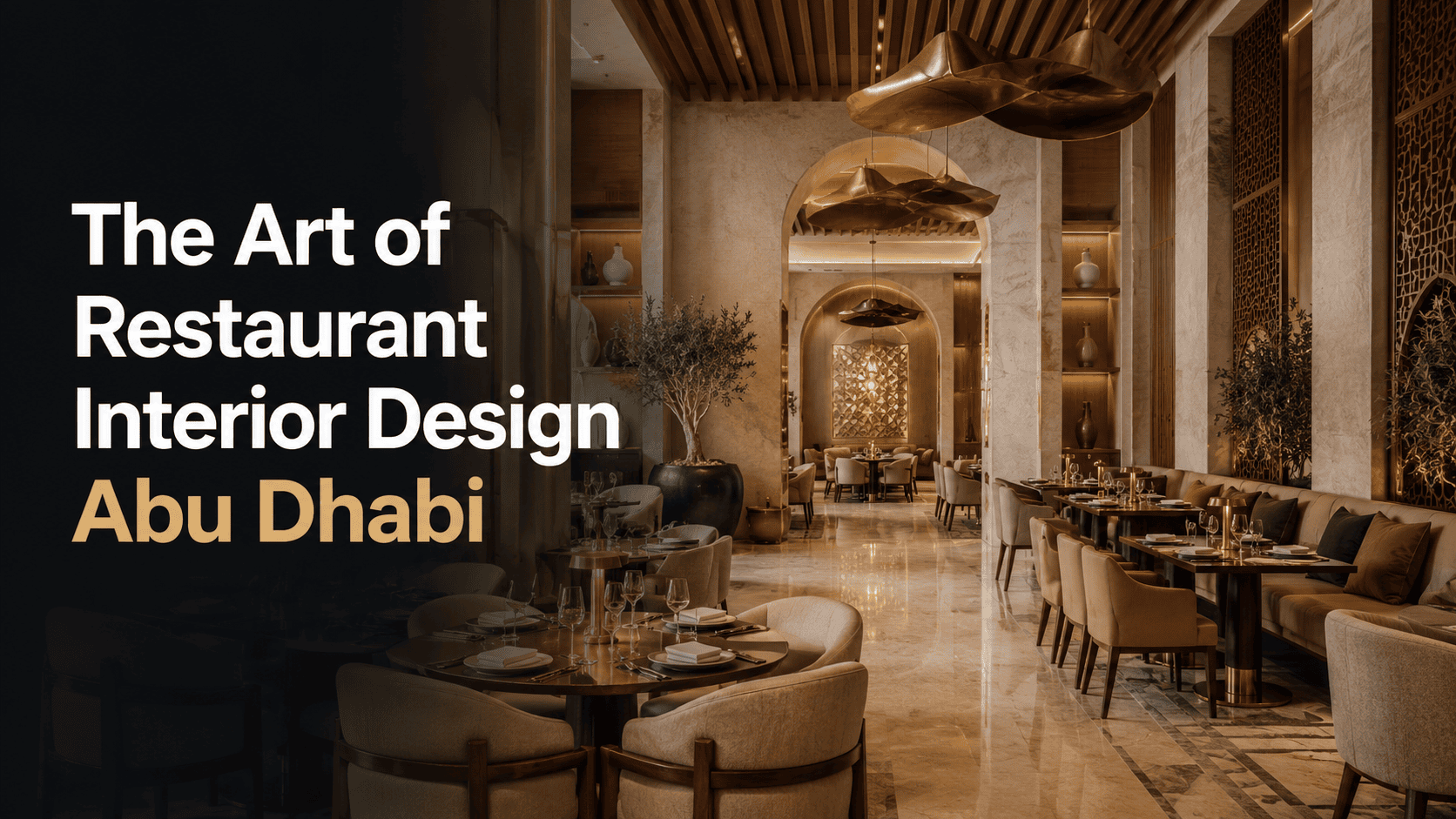
Restaurant interior design in Abu Dhabi focuses on blending luxury aesthetics with cultural heritage and functional flow. Successful projects prioritize high-end materials, acoustic comfort, and immersive lighting to create memorable dining environments. By integrating local architectural elements with modern spatial planning, designers help businesses increase guest retention and maximize operational efficiency in a competitive market.
The culinary landscape in the UAE is nothing short of legendary. From the bustling streets of Dubai to the refined, sophisticated corners of the capital, the demand for exceptional dining experiences has never been higher. When we talk about restaurant interior design in Abu Dhabi, we aren’t just discussing furniture or color palettes; we are talking about the architecture of emotion. A restaurant is a stage, and the interior design is the set that tells your brand’s story before the first dish even arrives at the table.
In a city where luxury and innovation go hand-in-hand, restaurant owners face the unique challenge of balancing aesthetic appeal with strict operational requirements. Whether you are launching a fine-dining establishment on Saadiyat Island or a chic, casual eatery in the city center, your space must be designed to handle high traffic while maintaining an atmosphere of exclusivity. This guide explores the core principles of creating world-class restaurant interiors that resonate with the discerning Abu Dhabi and Dubai clientele, ensuring your venue stands out in a crowded, high-stakes market.
Why Interior Design is Your Most Important Marketing Tool
Many restaurateurs make the mistake of viewing design as a secondary expense, something to be addressed after the menu is finalized. However, in the modern hospitality sector, your interior is your most powerful marketing asset. It is the first thing guests see on social media, and it is the environment that dictates how much time—and money—they spend in your establishment.
Effective design serves as a silent salesman. It guides guests through the space, highlights your key selling points, and reinforces your brand identity. In the UAE, where guests value high-end finishes and unique “Instagrammable” moments, a well-planned interior is essential for organic growth and repeat business.
- Brand Identity: Your physical space should mirror the philosophy behind your food.
- Guest Comfort: Ergonomic seating and proper flow prevent bottlenecks and keep customers relaxed.
- Social Media Reach: Strategic focal points encourage guests to share their experience online.
- Operational Efficiency: A layout optimized for service reduces wait times and improves staff productivity.
Integrating Local Culture with Modern Luxury
Abu Dhabi has a distinct architectural identity that marries traditional Arabic elements with ultra-modern luxury. Incorporating these nuances into your restaurant design can make your venue feel grounded and authentic rather than like a generic international chain. This is the hallmark of high-end commercial interiors in the UAE.
Designers often utilize geometric mashrabiya patterns, warm metallic accents, and natural stone textures to create a sense of place. The key is to avoid clichés. Instead of overwhelming the space with traditional motifs, use them as subtle accents in lighting fixtures, partition screens, or feature walls. This creates an atmosphere that feels sophisticated, timeless, and respectful of the local culture.
- Material Palette: Use high-quality marble, brushed brass, and rich woods to convey luxury.
- Lighting Design: Incorporate warm, layered lighting that mimics the soft glow of sunset.
- Spatial Geometry: Use arches and flowing lines to create a sense of architectural continuity.
- Artistic Integration: Commission local artists to create murals or installations that tell a story.
The Science of Spatial Planning and Flow
No matter how beautiful a restaurant looks, it will fail if the floor plan is dysfunctional. In the bustling restaurant scenes of Abu Dhabi and Dubai, space is a premium asset. You need to maximize the number of covers while ensuring that guests never feel cramped or rushed by the movement of waitstaff.
Professional space planning involves analyzing the “back-of-house” to “front-of-house” relationship. Your servers should be able to move from the kitchen to the dining area without crossing paths with guests entering the restroom or the main foyer. This invisible efficiency is what separates a professional design from a DIY project.
- Zoning: Create different “vibes” within a single space, such as a lounge area, a formal dining section, and a bar.
- Traffic Patterns: Map out the most efficient routes for staff to minimize collision risks.
- Acoustic Management: Use sound-absorbing materials like upholstered panels or heavy curtains to keep noise levels manageable.
- Privacy Buffers: Utilize decorative screens to provide intimacy for tables near high-traffic areas.
Lighting: The Secret Ingredient to Atmosphere
Lighting is perhaps the most critical element in restaurant interior design. In Abu Dhabi, where the sunlight is intense during the day, your lighting design needs to be highly adaptable. You need a system that can transition seamlessly from bright, airy lunch settings to moody, intimate dinner environments.
Layered lighting is the professional standard. You should have a combination of ambient light (general illumination), task light (for reading menus and service), and accent light (to highlight artwork, plants, or architectural features). Never rely on a single source of overhead lighting, as this creates harsh shadows and an unappealing clinical feel.
- Dimmable Systems: Always install smart, dimmable lighting zones that can be adjusted throughout the day.
- Color Temperature: Stick to warm color temperatures (2700K–3000K) to make food look more appetizing.
- Focal Points: Use spotlights to draw attention to signature dishes or a central bar feature.
- Decorative Fixtures: Choose statement pendant lights that serve as art pieces in their own right.
Sustainability and Biophilic Design Trends
The global trend toward sustainable design has made a significant impact on the restaurant industry in the Middle East. Biophilic design—the practice of incorporating natural elements into the built environment—is particularly effective in the UAE, where the desert landscape can sometimes feel disconnected from nature.
By bringing plants, natural materials, and water features into your restaurant, you create a refreshing oasis that guests naturally gravitate toward. Sustainable design also extends to energy efficiency. Using LED lighting, motion-sensor climate control, and locally sourced materials can significantly reduce your operating costs while appealing to eco-conscious diners.
- Indoor Greenery: Use vertical gardens or potted olive trees to bring life into the space.
- Natural Textures: Incorporate rattan, linen, and untreated wood for an earthy, organic feel.
- Energy Efficiency: Invest in high-performance insulation and smart HVAC systems.
- Local Sourcing: Use stone and textiles produced in the region to reduce your carbon footprint.
The Importance of Professional Interior Styling
Once the construction is complete, the final layer is interior styling. This is where the personality of your brand truly shines through. Styling involves the selection of tableware, menus, uniforms, and decorative objects that tie the entire concept together. In a luxury market like Dubai or Abu Dhabi, every detail is scrutinized by guests.
Consistency is key. If your restaurant features a sleek, minimalist architectural design, your menu design and staff uniforms should reflect that same minimalism. If your theme is rustic and traditional, avoid ultra-modern, plastic-based accessories. Professional stylists understand how to curate these elements to create a cohesive sensory experience that lingers in the guest’s mind long after they leave.
- Tableware: Match the weight and texture of your plates and cutlery to your menu style.
- Uniforms: Ensure staff clothing complements the interior color scheme.
- Scent and Sound: Consider the subtle impact of background music and signature scents.
- Menu Design: Use typography and paper quality that align with your restaurant’s branding.
Conclusion
Investing in professional restaurant interior design is the difference between a place to eat and a destination to experience. By focusing on the flow, lighting, cultural context, and material quality, you create a space that is not only beautiful but also highly profitable. Whether you are operating in the vibrant hubs of Dubai or the prestigious districts of Abu Dhabi, a thoughtful design approach is essential for longevity and success.
Are you ready to transform your restaurant into the next big thing in the UAE? Our team of expert designers specializes in creating bespoke, high-performance interior environments tailored to your unique brand vision. Contact us today to discuss your project and let us help you bring your culinary vision to life.
How much does it cost to design a restaurant in Abu Dhabi?
Costs vary significantly based on the square footage, the complexity of the design, and the quality of materials selected. Generally, high-end commercial design projects in the UAE require a comprehensive budget that covers everything from space planning and 3D visualization to furniture sourcing and fit-out management.
What is the most important element of restaurant design?
While aesthetics are important, functionality is king. If the layout is poor, staff cannot serve efficiently, and guests will feel uncomfortable. A successful restaurant design must balance a beautiful visual identity with a seamless operational flow that allows the business to function at its peak.
How long does the restaurant design process take?
From initial concept and feasibility studies to final site handover, the process typically takes anywhere from 3 to 9 months. This timeline includes planning permissions, material sourcing, architectural drawings, and the physical fit-out phase. Complex luxury projects may require additional time for custom millwork and installation.
Should I prioritize social media appeal in my design?
Yes, but not at the expense of comfort. “Instagrammable” moments, such as a feature wall, unique lighting, or a signature piece of furniture, are vital for marketing in the UAE. However, these should be integrated naturally into the design rather than feeling forced or distracting from the dining experience.
How can I make a small restaurant feel bigger?
Designers use several tricks to maximize space, such as installing large mirrors, using light color palettes, and opting for slim-profile, leggy furniture that allows the floor to remain visible. Proper lighting also helps by reducing dark corners that can make a space feel closed in.
Do I need an interior designer if I already have a contractor?
Yes. A contractor focuses on the build and technical execution, while an interior designer focuses on the experience, brand identity, and spatial psychology. Bringing in an interior designer ensures that the end result is not just built correctly, but is also aesthetically optimized to attract and retain your target customers.

Creative Shelf LLC: Redefining Interior Design Excellence in Dubai
Since its inception in 2007, Creative Shelf LLC, co-founded by Mr. Huzefa Altaf, has been a cornerstone of Dubai’s interior design and fit-out industry. Renowned for crafting smart, functional, and visually stunning spaces, Creative Shelf delivers bespoke solutions for residential, commercial, retail, hospitality, exhibition, and industrial projects. Under Mr. Huzefa Altaf’s visionary leadership, the company—part of the Creative Group of Companies, including Creative Furniture and Creative Interior Company—leverages an in-house execution model to ensure seamless project delivery, from innovative design to precision fit-out.
With nearly two decades of expertise, Creative Shelf transforms spaces, focusing on sustainability, user-centric design, and measurable ROI through strategic brand integration. Their diverse portfolio, from luxurious villas to dynamic office spaces, showcases their mastery in blending aesthetics with functionality, earning them a reputation as a trusted authority in the UAE.
Creative Shelf’s thought leadership is evident in their blog, which offers expert insights on design trends and practical solutions, empowering clients and enthusiasts alike. Committed to excellence, innovation, and quality, Creative Shelf LLC continues to set the standard for interior design and fit-out services in Dubai, creating spaces that inspire and endure.